Coming forth by day
The Book of the Dead is a collection of spells for the deceased. Its Egyptian title describes coming forth by day: recovering movement and a renewed life beyond the tomb. 6
Ancient Egypt · Death & renewed life
Osiris, the heart, and the freedom to go forth
The Egyptian dead enter a world in which they must speak, remember, and be recognized by the gods. Osiris has passed through death before them. Isis restores the stricken god, the heart answers for a lifetime, and the soul receives the freedom to go forth again. The funerary books prepare a named person to share in this divine renewal.
Beliefs · Diagrams · Practice · Primary texts
The essentials
These are the tradition’s central teachings.
The Book of the Dead is a collection of spells for the deceased. Its Egyptian title describes coming forth by day: recovering movement and a renewed life beyond the tomb. 6
Osiris is the god whose life continues through death. The deceased takes his name in the funerary texts and seeks the same restoration that the gods accomplished for him. 5
Isis searches for Osiris, protects him with her words, and raises his motionless body. Her wings bring the breath through which divine life begins to stir again. 5
Maat is truth and the right order of life. Before Osiris, the dead person must answer for concrete wrongs, including causing hunger, taking another’s property, and falsifying measures. 3
The heart can bear witness against its owner. Spell 30B addresses it directly, asking it to remain with the deceased and offer no opposition at judgment. 2
The ba is a mobile manifestation of the person, often translated as soul. Spell 89 asks that it return to the body and move freely among the gods. 4
Read the papyrus
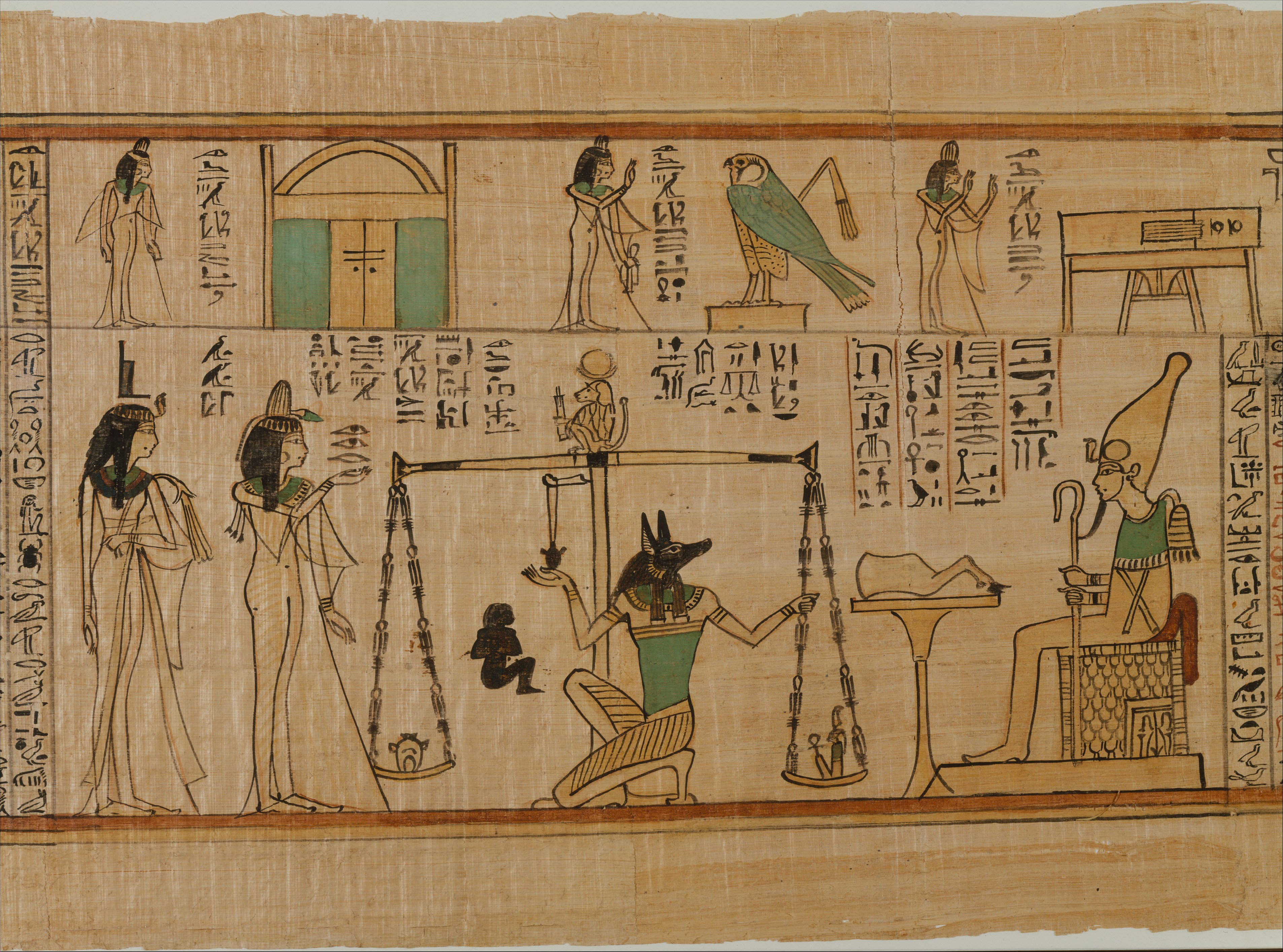
Nauny, a chantress of Amun, appears before the scales in this papyrus made for her burial. Follow the scene from the woman on the left to the seated god on the right. The drawing below isolates the two things being weighed; the photograph preserves the entire judgment section.
The historical image
Ca. 1050 BCE, Thebes. The Met, 30.3.31. Complete museum photograph of the judgment section, including the upper register. Open the original to inspect the figures and inscriptions.
The two pans · simplified detail
The beam and pans are an explanatory drawing. The ancient forms and their surrounding deities remain visible in the photograph above.
Find them in the lower scene
Spell 89 · the prayer of Ani
The arrows explain two requests in spell 89. They do not reproduce an ancient diagram or prescribe a timetable for the soul’s movements.
The historical image
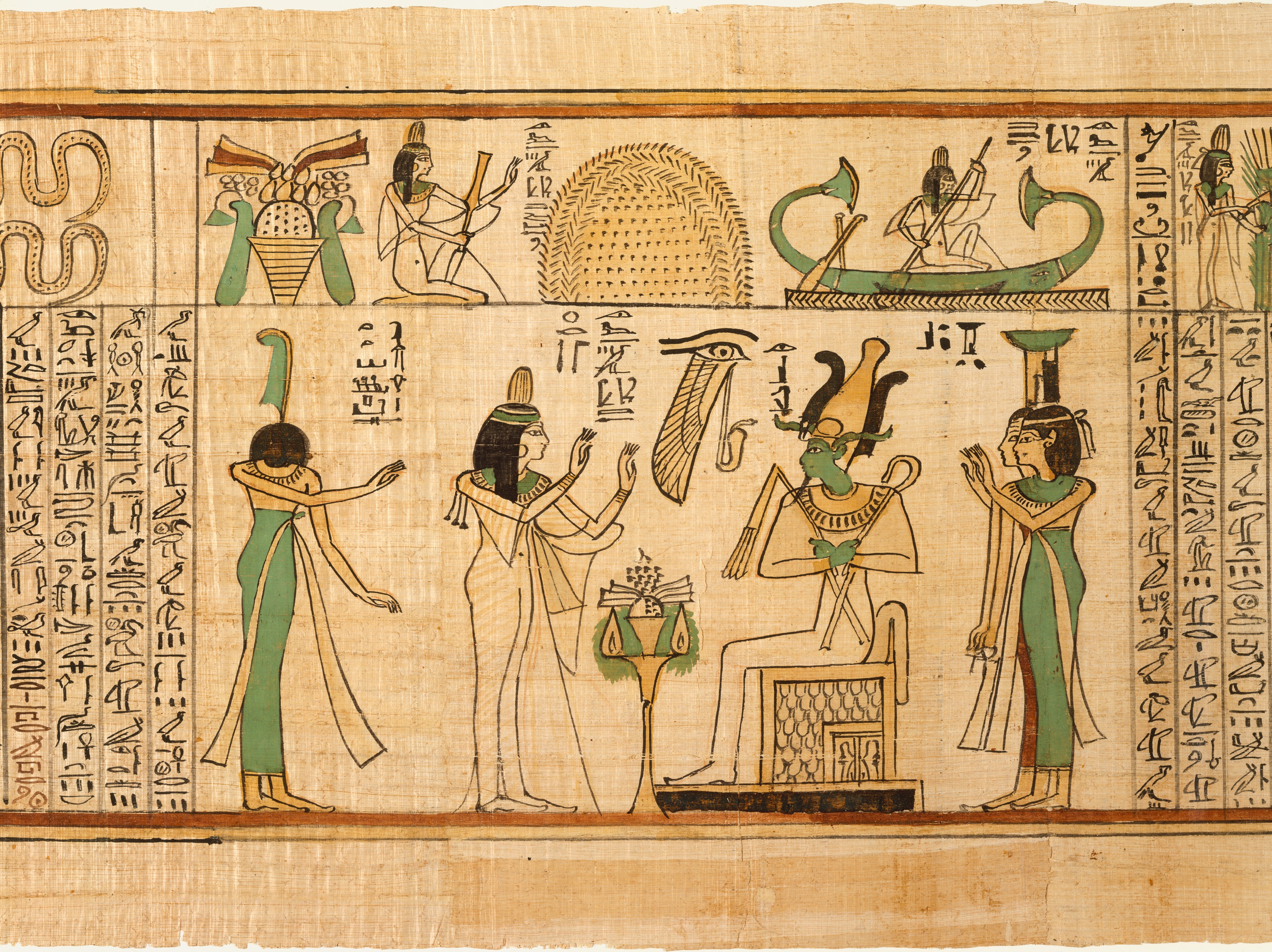
This second section of Nauny’s papyrus shows seated Osiris and the woman approaching him. The museum photograph is complete; no missing detail has been supplied.
Ani calls the heart his mother and the source of his coming into being. He asks it not to oppose him before the keeper of the scales. The appeal makes the danger intimate: the witness he most needs to keep beside him is part of himself.
Nu’s text names Osiris and the divine judges before setting out the wrongs the speaker has avoided. Knowledge of the gods and conduct toward other people belong to the same approach to judgment. A person who claims truth must answer for what others have suffered at his hands.
Ani asks the divine guardians to bring his ba back from wherever it may be. The prayer then places him among the gods in the eastern sky. The body remains something to see, recognize, and preserve as the soul enters this wider life.
The photographs show two sections of Nauny’s papyrus, not the entire scroll. The diagrams are modern explanations. The close readings also draw on the separate papyri of Ani and Nu; their spells are identified individually. 1234
The work of transformation
Spell 89 asks the gods to reunite the ba with the body. Its closing instruction gives the words a material companion: a golden soul figure, inlaid with precious stones, placed upon the breast. Speech, image, and the care of the deceased belong to one funerary act.
“Grant thou that my soul may come unto me from wheresoever it may be.”
The speaker calls on the divine guardians to retrieve the soul wherever it has gone. Their help makes the reunion possible.
Ani asks to look upon his body and to keep it from destruction. His continued existence includes a place to which his soul can return.
The spell asks for freedom of movement and a place among the gods of the eastern sky. Return to the body and participation in divine life are held together.
These points explain one funerary spell and its rubric. They do not reconstruct a ceremony of initiation performed upon the living.
The teaching in the texts
The speaker in spell 89 is called Osiris Ani. His personal name remains, joined to the name of a god who has already undergone death. This is a claim about what can happen to him. The divine life restored in Osiris can also awaken in the person whose body lies in the tomb.
A New Kingdom hymn describes the work of Isis with unusual tenderness. She searches without rest until she finds Osiris, shelters him with her feathers, and makes wind with her wings. Her speech protects him; her presence raises the form whose heart has fallen still. She conceives Horus, and the gods rejoice when the son of Osiris appears. Renewal requires the care and activity of other divine beings.
That story gives the funerary prayers their confidence. The dead person calls upon gods who have already rescued divine life from apparent ruin. Each request concerns something necessary for continued life. The body must endure, the soul must find it again, and the person must be able to speak and move. The repeated appeals gather these needs into the life of someone who can stand before the gods.
The joining of names matters throughout this process. Ani does not disappear from his own prayer when he takes the name of Osiris. He asks to see his body and to receive his soul. His particular life is carried into the god’s victory over death. The funerary text gives that hope a voice, allowing the deceased to speak from within the restoration he seeks.
Ani begins his appeal to the heart by calling it his mother. It has accompanied his coming into being and sustained the life of his limbs. Now, before the keeper of the scales, he needs it to remain beside him. He asks that it neither oppose him nor separate itself from him at the moment when his life is examined.
The fear is that something carried within him may answer differently from the words he wishes to say. The heart has its own place in the judgment. To stand before the gods requires more than finding the right declaration: the person and this intimate witness must be able to speak together. Spell 30B gives voice to the anxiety of that meeting.
Spell 125 makes the moral substance of the judgment clear. In Nu’s papyrus, the speaker denies causing hunger and grief, taking the property of an orphan, and interfering with fair measures. These are injuries suffered by other people in ordinary life. The declaration brings them into the presence of Osiris, where knowledge of sacred names accompanies an account of how the speaker has lived.
In Ani’s judgment scene, Thoth announces the favorable verdict. The divine company accepts it, and the devourer is denied power over him. Food, access, and continued life follow. The judgment has consequences for what the deceased can become: a truthful heart allows him to enter the company he has approached. The prayers dwell so closely upon the heart because the life to come must include the person who actually lived.
At the end of spell 89, an instruction accompanies the prayer. A golden figure of the soul, adorned with precious stones, is to be placed upon the breast of the deceased. The words have been asking for a reunion; the image gives that reunion a visible presence at the body itself. The funeral brings the spoken appeal and the sacred object together.
Earlier in the spell, Ani calls to the divine guardians and asks them to bring his soul back from wherever it may be. He wants to look upon his body, rest upon it, and prevent its destruction. These requests explain why bodily preservation matters. The person who goes forth among the gods still has a body to recognize and a continuing life that includes it.
The prayer also invokes the beings who tow the solar boat and defeat its enemy. Ani asks for his soul to accompany the gods in the eastern sky. His own renewal takes place within the divine renewal of light. The text moves between the body in its resting place and the expanse through which the gods travel. Ani asks to share in both.
Coming forth by day therefore involves several freedoms at once. The deceased can return, recognize, move, and join the divine company. A soul permanently separated from its body would leave one of the spell’s deepest requests unanswered. The prayer expresses hope for a life whose parts come together again. The gods sustain that life beyond the stillness of the tomb.
Across the centuries
The Pyramid Texts survive in the inner chambers of royal pyramids, beginning with that of Unas. Later generations continue to use many of their compositions. 7
The collections now called Coffin Texts preserve spells chiefly on coffins. Funerary teaching continues through new settings and arrangements. 8
Papyrus collections gather spells for the deceased. Their subjects include keeping the heart, remembering a name, reuniting soul and body, and leaving the tomb. 6
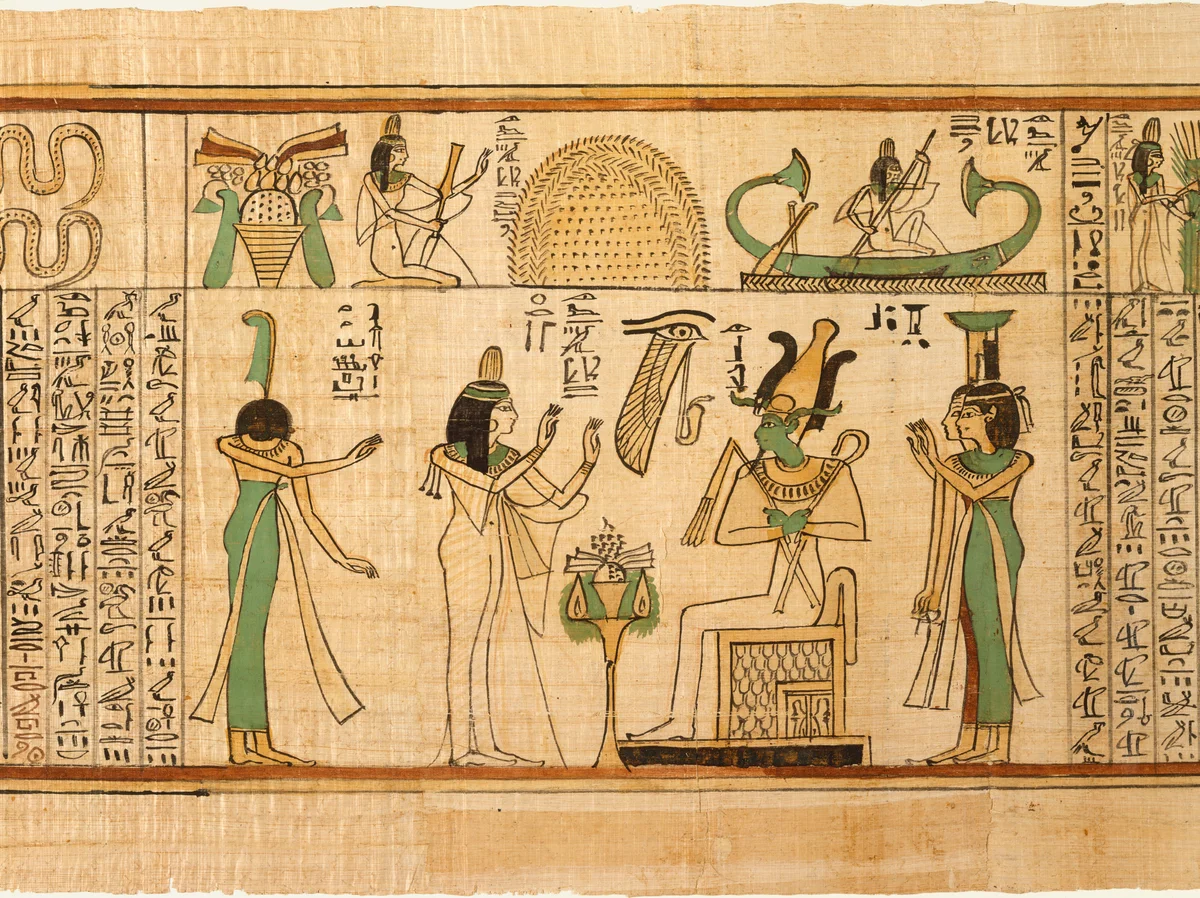
The papyrus illustrated here accompanies Nauny’s burial at Thebes. Her judgment is presented as successful: she receives her eyes and mouth again. 1
Continue into the illustrated journey
Continue into Poimandres, a later Hermetic vision from Roman Egypt. It gives the divine origin and ascent of the human being a different telling, through an encounter with Mind.
Enter Poimandres ↗Read at the source
Two museum photographs reproduce sections of this Dynasty 21 papyrus. The judgment uses a small figure of Maat in the pan; Thoth appears as a baboon. Public-domain originals remain available at full resolution.
Spell 30B addresses the heart. The accompanying judgment text supplies Thoth’s favorable verdict and the divine company’s response. Ani’s text is discussed separately from Nauny’s image.
Translation of the approach to Osiris and declarations concerning conduct. The publication uses N where the owner’s name would be spoken.
The invocation, reunion, solar company, and closing instruction for a golden soul figure. This public-domain translation uses “soul” for ba. The guide explains this particular spell; it does not construct a universal Egyptian anatomy.
The hymn embedded in the introduction describes Isis’s search, protective speech, wings, and the birth of Horus. It is distinguished here from the later account by Plutarch printed earlier on the same page.
Orientation to the collection. Spells 25–30 concern memory and the heart; 89 reunites ba and body. Spells 91–92 concern movement and coming forth; 154 concerns bodily preservation. Chapter numbers are modern reference aids.
Unas and the earliest surviving inscribed pyramid corpus, with its continued use in later periods.
Historical orientation to Pyramid Texts, Coffin Texts, and papyrus books. Their modern names refer to the materials upon which they principally survive.